Try creating a tropical mimosa table by using the delicate pink blossoms and fern-like foliage of mimosa branches. Explore creative ideas for incorporating these playful branches alongside whimsical flamingo placemats to transform your dining experience into a tropical oasis.
Foliage Inspiration: The Mimosa Tree
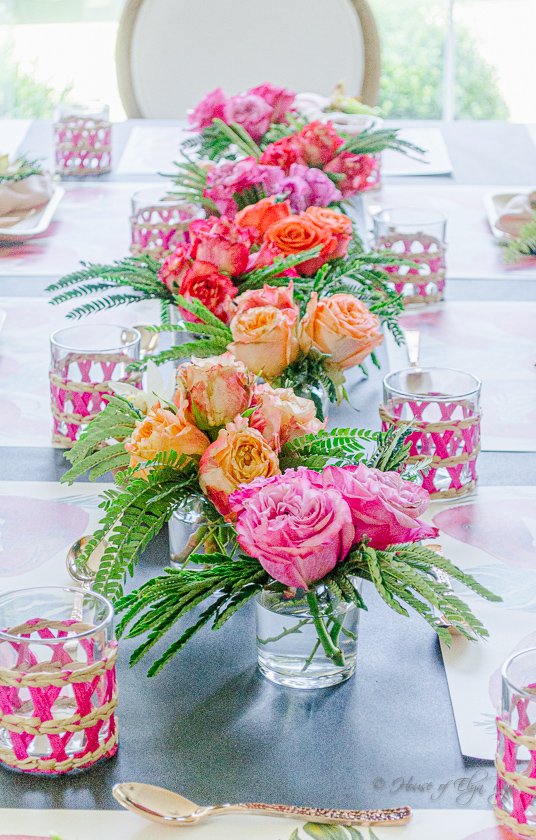
For this table, I drew inspiration from one of my favorite summer trees, the mimosa. Its delicate pink blossoms resemble pom-poms and contrast with its lush, green, fern-like foliage. I initially thought that this mimosa tree with pink blossoms inspired the brunch cocktail. However, to my surprise, the cocktail is named after the Acacia dealbata, another mimosa tree known for its yellow foliage.
Despite being widely found in nature, the stunning mimosa foliage has often gone overlooked as a cut flower. This could be due to the quick fading of the pink flowers or the branches that tend to close up easily. Regardless of the reason, mimosas look lovely when cut and placed in vases, offering a tropical and wild aesthetic with their fern-like leaves.

Mimosa Table: Flamingo Placemats
I chose to use mimosa branches on this table to complement the whimsical flamingo placemats. These summer-themed placemats (a similar one, 11 x 17 inches, is available here), which come in a pad of 24 and measure approximately 18 x 12 inches (or 46 x 30.5 cm), add a playful touch. Flamingos embody the quintessential tropical summer bird, making them a perfect match for the summer-blooming mimosa trees and their charming pink blossoms.

Table Runner
To tie the look together for this mimosa table, I selected a black paper table runner, laid over a white tablecloth, which pairs nicely with the black accents of the flamingo beaks, enhancing the overall aesthetic.

Mimosa Table: Napkin Rings
The napkin rings I used for this mimosa table are made from raffia ribbon. For added elegance, I incorporated blush-colored velvet ribbon to tie together mimosa leaves, fern, and a faux orchid, placing them between the ring and napkin. If preferred, you can easily substitute the faux orchids with real ones from the grocery store. To prep ahead of time, create your flower bundles and store them in a closed plastic bag in the refrigerator until needed; they typically last a day or two when kept cool.

Glassware for the Mimosa Table
To maintain a cohesive look, I chose black wine glasses (similar to the ones shown) that echoed the colors of the flamingo beaks and table runner. The addition of clear water glasses, etched with fern patterns (water glass with ferns can be seen here), created a nice texture alongside the mimosa fern leaves. I aimed to limit the color palette to four hues—white, pink, green, and black—so the clear glasses provided texture without adding another color.


Plates Used for the Mimosa Table
The pierced plates I selected add a bit of flair to the mimosa table design. While I experimented with other options, including black and plain white dinner plates, I kept returning to the pierced plates. Remember, when setting your table, prioritize your preferences. No one will be judging your choices, and if you’re satisfied with the final look, your guests will appreciate it too.

A Word about Mimosa Trees
While often considered an invasive species in much of the U.S., these blooming trees thrive effortlessly, leading some to label them as weeds. Commonly associated with the southern U.S., mimosas have an exotic appeal since they are native to Asia. This origin explains why they tend to proliferate without the checks that native trees face in their environment.

Fragrance
Despite mixed opinions about mimosa trees, many people do enjoy their fleeting, sweet fragrance. Don’t be afraid to use them on your table, as their fragrance is mild enough not to interfere with dinner.

Seeds and Seed Pods
When mimosa trees first bloom, they produce fluffy pink flowers amid their fern-like branches, which is what I featured on this table. While these parts are safe and can even be used to make tea, caution is necessary as the seed beans that develop later in summer are toxic to humans and pets. If you choose to include mimosa seed pods in your arrangements, keep in mind they are visually appealing but should never be ingested!

A Sensitive Tree
Did you know mimosa trees are sensitive to touch? Their foliage closes when cut, reopening only when they sense the “danger” has passed. They also contract at night and during rain, reopening in the morning sunlight or following rainfall. When I picked these branches, the leaves initially closed, causing some flowers to droop. Although the ferns eventually opened again, not all flowers followed suit. If you decide to use them for a table display, be sure to allow time for them to reopen after you have arranged them.


Other Posts You Might Enjoy
Click on each name or photo to link to the post.