

These lemon macarons are vibrant and packed with citrus flavor! They feature a delicious lemon buttercream filling, while the outer cookies perfectly capture that bright taste. They make for the ideal lemon sandwich!
The Precision of Macaron Making
Making macarons is a precise endeavor that demands accuracy and adherence to the recipe. Each step in the process—from measuring ingredients to mixing and piping—requires meticulous attention to detail. The primary challenge is achieving the perfect texture: a smooth shell complemented by a chewy interior. To ensure consistent results, one kitchen tool stands out as essential for macaron success: a food scale.

Use a Food Scale
A food scale is extremely helpful for baking macarons because it ensures precise measurements, which are critical in achieving the right texture and consistency. Unlike measuring cups, which can vary depending on how ingredients are packed, a food scale allows for accurate weight measurements. With this precision, you don’t add too much sugar or almond flour to the mix.

Options for Baking Lemon Macarons
When I first learned to make macarons, I relied on an indented silicone mat designed for macarons since I lacked the skill to pipe even circles freehand. While I’ve developed that skill over the years, I still find these mats useful occasionally, for instance, when I want to make heart-shaped macarons. However, I primarily use flat silicone baking mats as my first choice because the macarons bake up nicely on them, and it is now quicker for me to freehand the shapes. Another option is to use parchment paper. This option is great when you don’t have enough silicone mats. Also, parchment paper allows you to draw and pipe shapes such as flowers. Here’s a closer look at these three options for baking macarons.
Option 1: Silicone Mat with Macaron Indentations
Use a silicone mat with macaron indentations if you are a beginner looking to pipe consistently shaped circles. This mat has small cavities that help maintain uniform sizes. However, be cautious not to overfill the cavities, as this can cause the batter to spill over and distort the shapes. It’s better to underfill and use a toothpick to spread the batter. While these mats provide uniform sizes, you must buy extra mats for different sizes or shapes of cookies.

Optional 2: Silicone Nonstick Baking Mat
A Silpat-type baking mat is my favorite way to bake macarons, and there is no paper waste. If you choose a mat without printed circles, be sure to leave enough space between cookies for them to spread while baking. Position the piping bag perpendicular to the baking mat for perfectly round macarons. If angled while piping, the macarons can end up misshapen. After baking, I often find that not all my macarons are exactly the same size. To address this, I match similar-sized shells and add buttercream, and no one notices the size differences.


Optional 3: White Parchment Paper
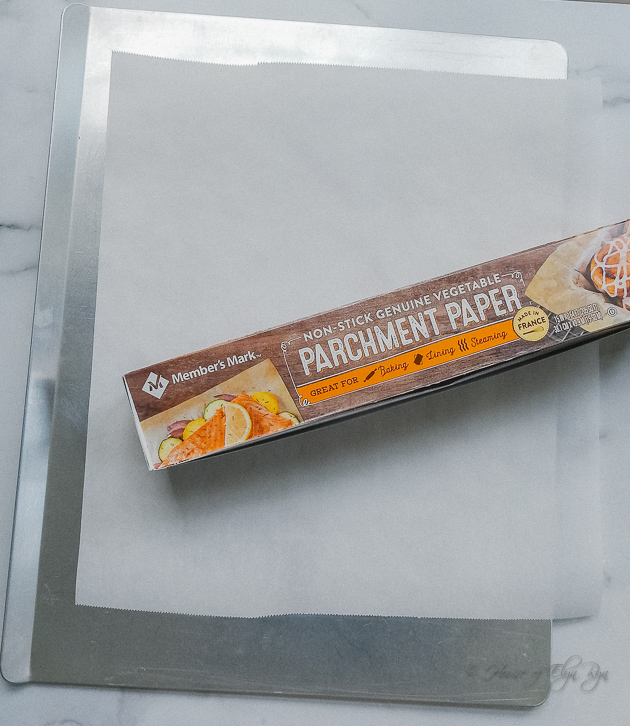
Use white parchment paper on a baking sheet if you do not have silicone baking mats. If you want a size guide, start by drawing circles around a 1 1/2-inch round lid or another object on the parchment paper. Leave space between circles to ensure that the macarons have room to spread.
Place the parchment paper on the baking sheet with the drawn side facing down so that you can see the circles through the paper as a guide. If you choose to make complex-shaped macarons that require a pattern, parchment paper is the best choice because you can outline images on the paper. Remember two things about this method: use white parchment paper so you can see any drawn pictures, and always place the drawn side down so you don’t cook ink into your cookie shells.
Refining the Dry Ingredients for Perfect Macarons
A food processor is essential for processing the dry ingredients to make macarons. Pulsing almond flour and powdered sugar creates a finer mixture, eliminating clumps and ensuring even distribution. This consistency is crucial for even baking and achieving the desired texture.

Sifting the Dry Ingredients
Once the dry ingredients are blended into fine flour, sifting out almond pieces is essential in achieving the perfect texture. By sifting, you remove any lumps that could affect the macarons’ final appearance and ensure that the almond flour and powdered sugar are well combined. Furthermore, sifting adds air to the mixture, producing a lighter batter. When finished, discard any leftover pieces in the sifter.


Adding Lemon Flavor
This recipe incorporates lemon zest to enhance the flavor of the macaron shells. Use a piping tip with a large round hole to prevent clogging from the zest. Consider adding 3 to 4 drops of concentrated lemon essential oil for an extra boost of lemon flavor. However, avoid using lemon extract or fresh lemon juice, as they can introduce too much liquid, unbalancing the ratio of wet to dry ingredients.
Folding the Batter for Lemon Macarons
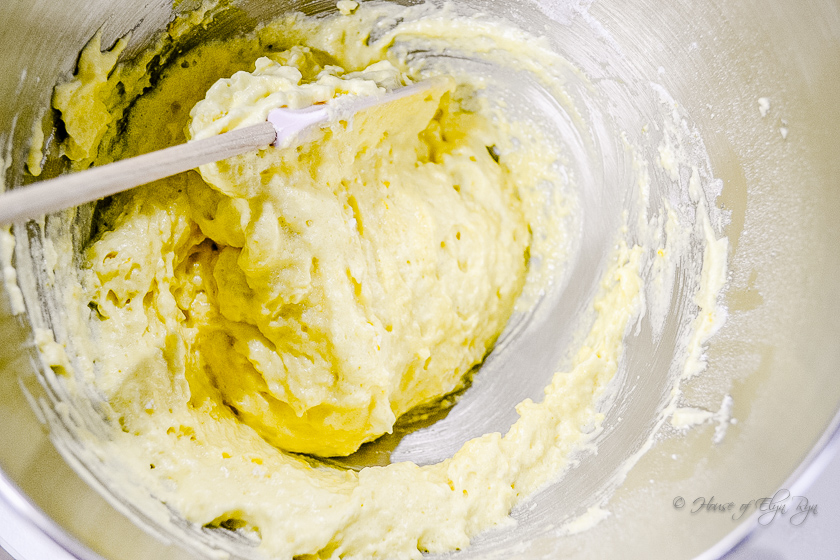
Macarons have whipped egg whites folded with the dry ingredients, and they should be carefully mixed so as not to overwork the batter. Too much folding can deflate the egg whites, and the macarons will bake up hard instead of chewy. This recipe uses an extra 1/2 egg white to help you finish the batter and take the guesswork out of determining when it is ready.


Piping Batter
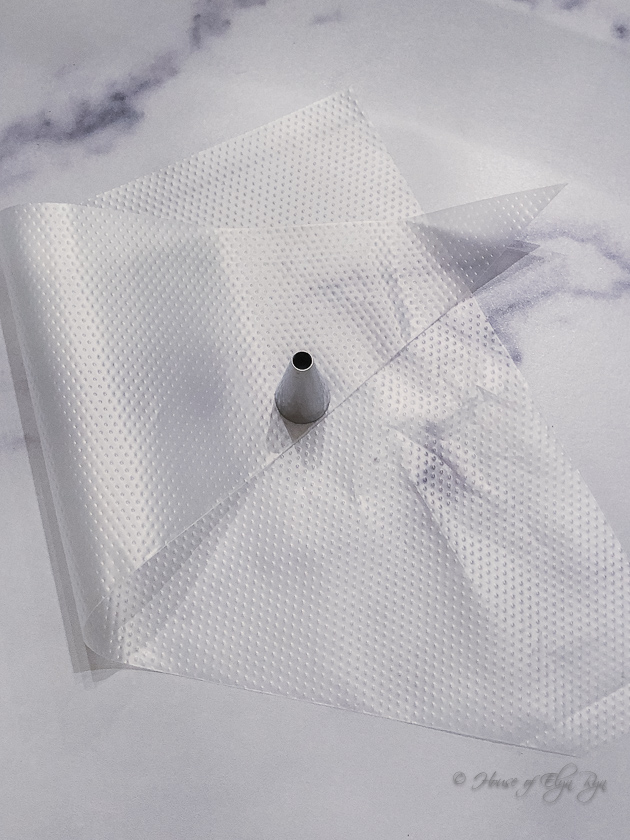
I use a medium to large-sized, plain, round tip and an extra-large piping bag to make lemon macarons. A large tip opening ensures the batter flows freely instead of becoming clogged with lemon zest. Here are some tips that have served me well:
- Place the piping bag into an extra-tall cup to fill it, folding the top of the bag down over the top of the cup to hold it in place.
- Do not overfill the piping bag because the batter might escape from the top when you apply pressure.
- Roll down the top of the piping bag and hold it as you pipe. Keep rolling it down as you pipe out more batter and the bag empties. This will help keep the batter in the nose of the bag.
- Prepare several baking pans with mats or parchment paper because the recipe makes a lot of cookies, and it is time-saving to pipe them all at once.
- If you want to stop the batter from flowing freely from the piping bag tip, turn the bag so the tip points to the ceiling and let gravity stop it.
- When piping, hold the bag vertically over the baking mat. Do not hold the bag at an angle. When held correctly, the cookie circles are round and uniform.
- As soon as you pipe a pan of macarons, tap the pan on the counter to settle the macarons and remove air bubbles. Use a toothpick to break any bubbles. Tapping the pan immediately after piping ensures the macaron skins haven’t had time to form. Once the skin forms, it is too late to tap the pans.


Resting the Lemon Macarons
Next, let the macarons rest before baking. This drying period enables the tops to form a “skin,” essential for the final texture. Resting times can vary based on humidity; typically, I allow at least 30 minutes, but on dry days, they may be ready in just 10 minutes. To test readiness, gently touch a macaron. If the batter sticks to your finger, the macarons need more time to rest. If it doesn’t stick, they’re ready to bake.
Baking Lemon Macarons
Macarons are baked at a low temperature. Keep a close eye on them as they bake; different ovens can vary in how quickly they cook–even between batches. Avoid letting them brown, or they risk losing their lovely color.
Cooling Lemon Macarons
After baking, let the macarons sit on the baking sheets until completely cool. Then, remove a macaron by holding it and pulling the paper or mat away. The cookies are fragile, so take your time when you remove them. If the shells do not release easily, they may be undercooked. You can place them back in the oven for one to three minutes until they release easily.

Prepare Lemon Macarons for the Filling
Match pairs of “same-sized” macaron shells. Then, place them flat-side up on a plate or the cooled baking pan. Use a round or star-shaped tip and piping bag, and add filling to one shell and sandwich another one on top.

Storing Lemon Macarons
Macarons have a short shelf life and will dry out in a few days. The best way to keep them fresh is to freeze them in an airtight container with waxed or parchment paper between layers. Frozen, they will keep their fresh taste and chewy texture for a few months.


Other Recipes You Might Enjoy
Click on each name or photo to link to the recipe.



Lemon Macarons
Equipment
- food processor
- sifter
- 1 round tip with a large hole
- 1 extra-large piping bag
- 1 small star tip
- 1 medium to large piping bag
- cookie sheets
- silicone baking mat(s) or parchment paper
- food scale (optional) (for weighing dry ingredients)
Ingredients
Cookie Shells
- 2 ¾ cups (275 g) almond flour
- 2 cups + 1 tablespoon (250 g) confectioners' (icing) sugar
- 6 large egg whites
- ¼ teaspoon cream of tartar
- 1 cup + 1 tablespoon (210 g) castor or granulated sugar
- 1 lemon, finely zested
- 3-4 drops food-grade essential lemon oil (optional) (do not substitute lemon juice or extract)
- 2-3 drops yellow food gel coloring
- ½ large egg white, beaten until frothy
Buttercream Filling
- 1 ½ sticks (3/4 cup) butter, softened
- 3 ½ cups confectioners' (icing) sugar
- 1 tablespoon fresh lemon juice
- 1 tablespoon cream or whole milk (add more if the buttercream is too stiff)
Instructions
Cookie Shells
- Line a baking sheet with a nonstick silicone baking mat or parchment paper. (See notes below to determine the best option.) This recipe will make enough macarons for several baking sheets.
- Using a food processor, combine almond flour and confectioners' sugar. Process until the mixture is finely ground. Sift the blended mixture, discarding any large almond pieces. Set aside.
- Using a mixing bowl and the whisk attachment, beat 6 egg whites until foamy. Add the cream of tartar and beat to dissolve it.
- Add 1/3 of the granulated sugar and beat for a minute until the sugar dissolves. Add half of the remaining sugar and beat for an additional minute. Then add the rest of the sugar and beat until firm, glossy peaks form, a couple of minutes or more.
- Mix in the lemon zest, essential oil, and a small amount of yellow gel coloring until well combined.
- Use a spatula to gently fold the dry ingredients into the egg whites. Mix well. The batter will be thick.
- In a separate bowl, use a hand whisk to beat the 1/2 egg white until it is frothy. Stir this egg into the almond mixture to moisten the batter.
- Snip the end of an extra-large piping bag and insert a round tip. Fill the bag with the macaron batter, fold the top to prevent spillage, and position it vertically over the baking sheet. Pipe 1 1/2-inch circles, leaving space between each for spreading.
- Gently tap each baking sheet on the counter as you finish piping a whole pan to spread the batter and remove air bubbles. Use a toothpick to burst any remaining bubbles. Allow the macarons to sit for about 30 minutes to form a skin on top. In dry climates, they may dry out faster, while in humid climates, it could take longer. Test for readiness by touching the surface. If the batter sticks to your finger, they are not ready and should sit longer. If no batter sticks to your finger, they are cured for baking.
- Preheat the oven to 300°F when the macarons are near the end of their curing time. Bake them for 14-17 minutes. Do not brown them, or they will lose their color. Cool them completely after baking.
- Remove the macarons gently by pulling the mat (or parchment paper) away from the shells. (They should not be sticky underneath, or they are underbaked.) Place the shells flat side up (upside down) on a large cutting board or another flat surface, matching the same-sized shells together.
Buttercream Filling
- Use an electric mixer to beat the butter until fluffy. Add the cream and lemon juice and beat until well mixed.
- Gradually add the confectioners' sugar, one cup at a time, beating after each addition until smooth. If the frosting is too stiff, add more cream. If it is too soft, add a little more sugar.
- Add the star tip to the large piping bag. Then, add the frosting to the bag. Pipe small stars on half of the cookie shells. Then, place similar-sized shells on the filling to form sandwich cookies.
Notes
Weighing Ingredients
Accurate measurements are vital for macaron success. For best results, weigh dry ingredients with a food scale; otherwise, measure carefully.Gel Colorings
Use a gel coloring that is not liquid. I recommend Wilton Lemon Yellow icing color for vibrant yellow cookies.Baking Options
You have three options for baking the macarons.- Use a Silpat-type nonstick baking mat. Some baking mats have circles printed on them for macaron making.
- Use parchment paper on a baking sheet. To help guide the size of the macarons, draw a circle on the parchment paper using a 1 1/2-inch round cup or another object, spacing out the circles for spreading room. Place the parchment paper onto the baking sheet with the side you drew on facing down. You will be able to see the circles through the paper.
- Or use a silicone mat with macaron cavities. This type of mat has small cavities that you fill with batter so they are all uniform. Do not fill the cavities to the top; the batter might run over the rims and distort the macaron shapes. It is better to fill them almost full and then take a toothpick and spread the batter until you gain experience filling the cavities.